PearlCast › Episode 28
Episode 28Apr 2, 202640 min
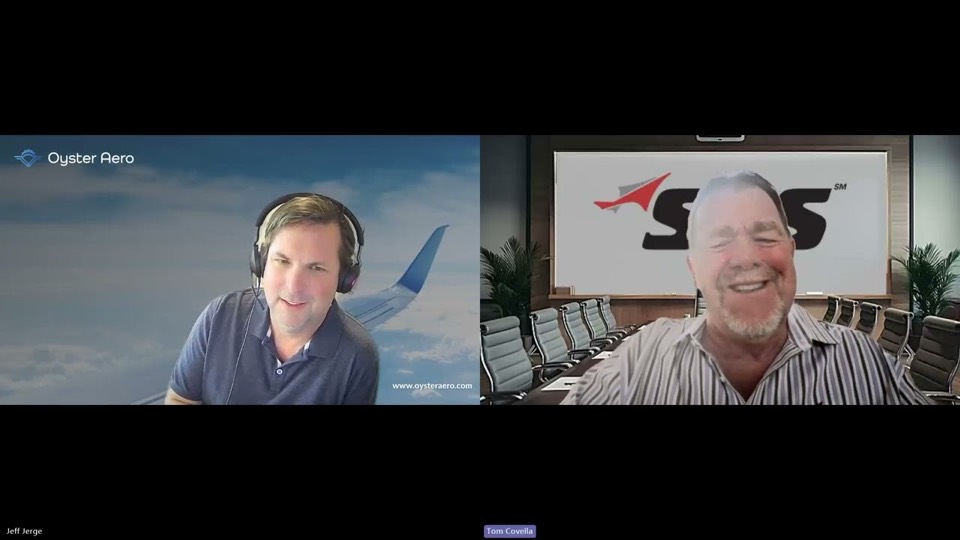
Tom Covella, STS Aviation Group
About this episode
We are honored to have the legendary Tom Covella join us on the latest episode. Tom walks us through his extensive aviation career, the founding of STS Aviation Group, and how customer service and a strong culture mindset is the winning formula!
Transcript
Read the full transcript
From the episode's captions, as published. Words that can't be made out are marked [unclear].
Welcome to the Oyster Aero PearlCast, where we sit down with founders and leaders shaping the aviation industry. From freshly formed startups to the biggest names in the sky, this episode is brought to you by our friends at Turbo Resources in Phoenix, Arizona. Now operating in 450,000 square ft of state-of-the-art warehouse space, Turbo continues to keep the aviation industry flying and is actively buying material. Now, we hope you enjoy this episode. All right. Hey everybody, welcome to the Oyster Aero PearlCast. And I'm smiling because I finally get the Tom Covella. I got him to sit down and stay in an area for 15 20 minutes. How you doing, Tom? I'm doing great, Jeff. I appreciate it. Good deal. Happy to be happy to be here. Wasn't avoiding you. Just, you know, trying to get ourselves aligned.
I got it. I got it. So, um, you know how we do it here with the founders and, um, you've been an aviation guy for a really long time. So, let's go way back. Way back when uh well, not too far back. That Yeah. When when did the aviation bug hit you? Like when were you like I gotta do that? So, you know what? That's a really good story. And I like to share this to people because when I used to interview people, I used to say, "Hey guys, within six months, this is something that you're going to figure out whether you're going to do the rest of your career or not." And it's funny now that, you know, employees I've had for, you know, 20 plus years, they said, "Yeah, you know, when you told me that, I just kind of went with it." But you were kind of right. Um, I started my career in New York. And at that time, you know, New York was quite the aerospace hub. You had Grumman building all the military aircraft. You had a bunch of aviation companies and aerospace companies. So I started in the manufacturing side and then gradually worked my way into the aftermarket side and then obviously as Grumman and a lot of the aerospace started moving into the southern belts and getting out into the more cost competitive areas um I was faced with a reality of okay do I stay in New York and try to figure it all out or follow it. So, uh, in the 90s, uh, I had the opportunity, got recruited. Curtis Wright was setting up, um, aftermarket group in North Carolina.
They were doing, uh, manufacturing as well, but were looking to expand the aftermarket, looking to, uh, diversify out of their OEM. So, I was brought in to kind of bring in new capabilities and so forth. So, I kind of really dove in full-time into the aftermarket back in the early 90s. Y but what's funny now, you know, you talk about the years, I guess I know I've been in the business for a while because when I go to conferences these days now I'm meeting friends of mine's kids that are now in the business you know and then you know when people start saying well how long have you been doing this I sit and say probably longer than you've been alive. to you know like you know used to used to feel good saying yeah I've been doing this 25 30 years well I'm past that now I just kind of use the average but um I I was here ever since the right flyer flew you know so um anyway I wouldn't push you that far so um no don't go that far so let's see right North Carolina and um so you jumped in the aftermarket and And then uh then what?
That that shifted me full-time. I was kind of doing 5050 and like I said, the last place I worked in in New York uh was a division, a landing gear facility that was owned by BBA. Um they shut down the facility in New York and actually didn't go down south. They decided to move it up to New Hampshire. So I made the decision I'd rather go south versus north. So I I moved to North Carolina. and, you know, was part of the the the group that really put Curtis Wright on the map from an aftermarket perspective. Um, you know, we we were traditionally doing OEM products and then we started expanding outside of that. So, we had a really good talented group of guys and we just, you know, we kicked butt, we kicked butt and took names along the way and and and grew the business and kind of established Curtis Wright as more of an aftermarket than strictly a pure OEM player. Yep. Yep. And we had a lot of fun along the way. A good group of people that, you know, we still were still like family and and everybody kind of went their own ways.
I pulled some people with me on my next stop. So we, you know, you know how it is. You kind of you you stick with the people you grow with and and work with and win with. Yeah. People change or people don't change the business cards do sometimes. Exactly. So um Okay. So you did that and you rocked it and then what was the next stop? Next stop was Goodrich. So when Goodrich Goodrich had decided that they wanted to separate their MRO businesses from the OEM businesses. Um so they created the Goodrich MRO group which was back at that time the hangers at Tramco and then the component back shops, the landing gear facility, the avionics facility, wheels and brakes. So I was brought in as the first outside member to kind of helped consolidate, integrate and and kind of figure out how do we build the teams there. So that was a lot of fun. We once again, you know, I pulled some of the Curtis Wright folks that we we had success with and and uh put a team together and integrated with with some of the, you know, existing product line folks within Goodrich and really uh went out there and it kind of is that was back in the mid to late 90s when the term mega vendor kind of created the mega vendor agreements. I remember so we were out there basically trying to establish mega vendor agreements on the MRO that include all the different capabilities within the Goodrich back shops. So that was a lot of fun and uh you know we we had a lot of fun growing that business integrating that business and uh we had an acquisition where we acquired the roar business unit and that was a lot of fun and then we had acquired the Manasco landing gear business as well.
So, we were growing both organically and through acquisition, but that was just a it was a fun ride and a good ride and you know, we uh we we we built a good business case and like I said, you know, had a good really talented group and did well until Goodrich decided they wanted to put the MRO back under the OEMs and we all kind of went our different ways again from there. It's funny how everything's cyclical. Um, so all right. Well, so kind of first half of my life was corporate America and then I kind of reached that that point where it's like, you know, same, you know, do I want to continually get called into a leadership meeting and said the board has decided we're going to do this. So, so that would be your point to go, all right, I'm ready for something different, right?
So, I I I had I always considered myself I was always kind of like a hands-on techy type of guy. always enjoyed walking through shops and you know understanding you know and I think starting in manufacturing and then being in MRO something I never really had gotten involved in was just the pure parts side you know y and actually I had a very good friend of mine that told me he said hey Tommy you know with your technical knowledge of the parts you would do really well on the parts trading side and I'm like really? But I'm like and he says yeah. He says there's guys that are out there doing very well that you know and you know with your background and knowledge of the various products you'd probably do well. And sure enough you know you found out that the same parts that people were asking you to set up capability on guess what were the same parts that people were looking to buy. Yep. Yeah.
So, it was just kind of understanding that transition and making that transition. And then I kind of had that I call it like the Tom Cru the Tom Cruz moment where I just said, you know what? We got to give it a whirl. But I said, you know what? I I want to do something different though. You know, I don't want to recreate what everybody was doing. So, this was 2001 and I made the decision that I was going to be the 737 NG guy and everybody said, "Well, is that a little too early in the stage?" And I said, "You know what? There's guys already entrenched in the existing business." I want to be the NG guy. Yep. So, I really went back, you know, went back old school. was I was able to get my hands on a 737 NGC CD IPC and got rid of my suits and ties from corporate world and put shorts and flip-flops and a t-shirt and literally just started googling nomenclatures of okay, you know, air starters and bleed valves and started building that up and saying, okay, if I'm going to be in this market. Let me get what I know traditionally are the items that are high failure type items, but also obviously try to get some of the higher dollar type items so that you create an identity of hey, if you need a if you need an ECU on a 737 NG, you're the guy called me.
So, and it was funny because at that point in time, you know, so I was buying a lot of the higherend dollars so that obviously to differentiate myself from some of the other people that were, you know, were dabbling in it, but quickly kind of getting myself established and, you know, and getting to know and learn it. And before I knew it, you know, I was playing in the sandbox with some of the bigger guys. And when um I kind of call it the the the moment that really kind of opened up the doors for me is when WestJet was transitioning from their classics into their NGS. I was invited to bid on it and they started out wanting to do a Power by the Hour. And I'm not a big fan of Power by the Hours. I believe in establishing true partnerships. Yep. And what I always find [unclear] is somebody wins and somebody loses.
Sure. Yeah. Yeah. It's just a risk profile transfer. You know, it's a risk profile and everybody's trying to manage and you know mitigate their risk as much as possible. So kind I took a different approach and said instead of paying by a power by the hour, why don't you just we'll we'll put a pull together the items that that I know are high demand based on what I'm seeing. Yep. And then we review it every quarter. We add pull items in, pull items out, whatever. And uh convinced WestJet that that was probably a better approach to go. But here I was. I was two, three and a half years in business and I'm now competing with the Lufanszas and you know the Air France KLMs and all the the big boys and believe it or not that ended up really being my advantage because at that point in time WestJet sat there and said at the end of the day they basically said we want your organization to basically support 100% of our purchasing. I looked at him. I said, "Well, that's not that's not what we bid." He goes, "Well, yeah, I know that, but you'll do a better job of it than we are, and I know that you'll give us the attention and the focus that we're needed and that for for sticking their neck out there a little bit. I mean, you know, to this day, that person that made that decision, I'm I'm forever grateful to.
And, you know, we're still friends to this day." And that that then opened up because now I had a letter of delegation from WestJet and at that point now it kind of opened the door for OEM opportunities for me. Yep. Yep. And you know from there it just it kept growing. You know started with a couple then more and OEMs were happy because they were getting more spare sales and little by little you know we started creating this distribution model but also supporting obviously stuff outside of that. But having that letter of delegation really created an avenue for us to grow the business, establish ourselves with the OEMs, and then kind of continue to grow from there. Wow. I love this story because in the back of my head a few months ago, I had David Neilman on who was probably starting WestJet at the time that you were winning business while everybody's thinking differently. So that's um that's amazing. That's so cool.
Yeah. And and it was really good because at that point WestJet was still small enough. So I mean we had like a a true partnership, you know what I mean? We did activities together and you know we you know we we kind of grew and learned along the way together and helped them achieve the success they had and they obviously continued to grow and we continued to grow and so forth and so on. That's fantastic. And what was the company name when you started it? So back then that was trade winds aircraft and engine services. Yep, I remember it now. Yep. Okay. And then we took the same concept that we did with the airframe and then shifted that into the engines and then we were the first guys that took down -7 engines. Wow. How was that shift from airframe to engine? Because I know lots of people that want to do it and you know are thinking about getting into it and all that. I mean what what was your what was what was the differences that you Well, there was an existing engine business that I had partnered with and I had started the airframe and kind of you know after 911 and some of the other things that you know they were primarily [unclear] then of course everybody was going everybody was moving into -3s and then we were like well look you know everybody wants to be in a dash three, why not try D7?
Just start with the new stuff, you know, you know, because realistically, you know, through all the different, you know, the things in the early 2000s, there was obviously different things that went on, but the the the newer generation aircraft were obviously growing fleet sizes and the demand was there. So, it was growing the business. So we maneuvered both our business into into the kind of the NG market and integrated the two into one and and you know had a lot of success along the way. Wow. I love this. So the theme is while everybody is worried about the aftermarket, you're come looking at the new platform coming down the pike and getting good at it before anybody else thinking about it. Getting the head start. Even you know it was funny the same story that when I started with the airframe on the engine it's too early everybody was telling us with the engines and we said okay yeah let's see and you know we got one and before we even closed on the one the second one popped up and we're like well we need to get the second one for the first one that makes sense from a business model and before we knew it we were then the -7 guys.
Wow. Wow. So uh yeah. So, you know, it it was fun kind of pioneering our way into the NG and being that both from an engine and airframe point of view. And, you know, we we had a lot of success and growth along the way. And we're really were able, you know, the other thing we started realizing was that to establish what we wanted to accomplish, we started really growing our own as far as people. Yeah. you know, not that there's anything wrong with that. But what I kind of found out was as you, you know, as we brought people in from other places, it was kind of like, well, this is how we do it here. Well, this is how we did this here. And I was like, guys, we're not looking to copy what that guy was doing with that guy. We're going to do something different. Yep. And kind of to me, as I go back to the, you know, the the the Tom Cruz thing, it's the end of the day, how do you add value to your customer?
You know, I I heard it for so long and even when I you know, even in my days at Goodrich kind of like, you know, well, I have to deal with you. Well, I never want to be the guy you have to deal with. I want to be the guy you want to deal with. I want to the guy that you want to partner with not being a necessary evil, which I kind of kept hearing like, well, we work with them, it's a necessary evil. But I said, I never want to be categorized like that. So, how do we be different? How do we add value? And uh we just created the mindset that you know we're truly 247 and you know what whatever it takes if it makes sense we're going to get it done. And and you know one of the things which was interesting that when I had hired people worked at other places you know you have you you do broker deals and sometimes deals fall through right and I'd be like all right we're going to take a loss on it but we're still going to deliver it. And they're like really? I'm like yeah. I'm like, we want to be a guy that people know we could deliver. And you know what? We may lose one or two, but if we make it up on eight other ones, we're back in 800. Yep. Yep.
You know, and so that was always the approach of looking at it from a short term. You not looking at it, not looking at it from a short term, but looking at as a long term that says over this period of time, I'm going to win more than I lose on some of these deals, but guess what? I'm always going to deliver. I I I mean, not to flatter you, but I was talking to I saw Tim a couple weeks ago and talking to Sammy today and I mean all these things that you're saying like you still see it, you know what I mean? Like it's in the culture. So that's cool. Well, that was always the big thing is is is really building the right culture, you know, and and getting the right mix of people. And you know what I always said is you could teach people aviation Yeah. But finding somebody who's got a good motor, you know, knows how to build a relationship, knows how to get things done, that, you know, that's something different. And that's, you know, for me, when I look back over, you know, the period of of, you know, of an entrepreneurship or whatever, I've really never hired anybody for a position.
the person for a person, right? Right. You want to be able to trust them and have a relationship like you would a customer or a vendor, right? I mean, same thing. So, yeah. I mean, good people give you results. Yeah. So, bring them on your team and figure out where's the best place for them. But, but bring winners and rain makers on your team. That's cool. And that's, you know, in many in many cases and realistically what was very nice was a lot of people approached us versus really going actively recruiting. I mean, we never used head hunters. We barely we never even really used HR. We just used industry network or I would imagine it probably takes you about 30 seconds to size somebody up after, you know what I mean? Like maybe longer. I don't know. But it just uh you probably have a pretty good gut feel by now after you know that. Wow.
So um Tradewind, so how did it all kind of get into STS? Like how did all that come together? So So STS going back to their early days was traditionally a staffing business. Yep. And after 911, they quickly realized that, you know, they went from having x amount of mechanics out to like nothing. Yep. So they they started looking into diversifying into and I was personal friends with the guys from STS, so kind of, you know, we'd see each other out and about and, you know, we were neighbors and friends and so we would bounce different ideas off of them. So little by little STS was looking to diversify. So you know they added an engineering business and then they added a line maintenance business. And you know actually interesting enough when they launched the law the line maintenance business.
My team at my team at trade runs actually was marketing that for them because Mark Smith who was who was the VP at that time he was like I'm a oneman show. He's like at least you know you've got a sales team. how can you help us out? And we quickly helped them out land uh land one of their first customers and help them put, you know, help them find uh somebody to to lead the business to start it and get it off the ground. And then kind of as we as they started evolving more, we were all I think we were at a golf weekend somewhere and they're like, "Hey, Tommy, the only thing we're really missing is the component side." And uh you know I I saw the vision that STS had and said you know this this would be fun you know being able to just to offer a more integrated solution really from nose to tail we can do engineering we could do line maintenance you know we can do components and we could also provide you with technical staffing so you know there there's the opportunity to really integrate all the business units. So in 2008, we put these four companies together and we're like, "All right, what are we going to call them?" And we said, "Let's call it STS Aviation Group." Yep.
And so we, you know, kind of started that brand and just, you know, little by little just trying to to get it out in the market that we're not just a staffing business anymore. Sure. And little by little we started adding more capabilities. And I think you know at the end of the day we were b we were a bunch of aviation guys. And you know, we had a good network, good service history, and as a result of that, we kind of started getting these phone calls like when the airlines or MRO's really weren't sure how to handle a situation, they would reach out to us and we would sit there and say, "All right, is is this something we could assist with?" And the one thing I think we were always good at is we never took on more that we felt that we could support because we felt that the reputation that we all had established over the years was more important than any one deal. So if it was something that we felt that we couldn't do organically or even acquire somebody, we make our own, you know, and like you said, you know, you know how the business is. It's, you know, it's a it's a network and we all help each other.
So, if I called you and said, "Hey, Jeff, I got an opportunity. Delta Airlines is looking to do this." You'd be like, "Sure, Tom. I'll take good care of it." Yep. Yep. So as these opportunities came up, we would say, okay, you know, is this something that we could organically develop and grow or is there somebody out there that has that capability but maybe isn't aligned with the resources that we could bring to the table. Yep. Yeah. And I would imagine you weren't like, "Sorry, we can't do it." You probably tried to offer some sort of help even with you know, which was great. We we'd sit in a room and we'd throw it up on the board and we'd hash it out. And the the the nice thing about it was that we were able to move fast and make fast decisions. Yep. Y but one of the things that that I'll always remember is when we were sitting in there and actually when we were talking about putting it all together, uh the CEO looked at he says, "You know what, guys?" He's like, "We're going to try different things and some are going to work and some aren't going to work, but you know what? We're going to try them." And that to me, you know, really represented the true entrepreneurial spirit that we developed with an STS is, you know what, we're not going to look at all the reasons why not to. We're going to look at how can we. Y and if we could convince ourselves how can we and it makes economical sense from what we look at we're going to try it and that was the mindset that we had and to be honest with you it it worked you know and and so that's all of a sudden we really started you know creating a bigger presence and you know making a lot of noise in the business we always had you know the culture was always very very important and that's what I mean I used to have People come up to me and they say, "Oh my god, how many people did you bring to this show?" And we're like, you know, and our attitude was
like, you know what, you go to a conference, if you're not with your customers, guess what? Somebody else is. Yep. So if you're bringing your guys there that had their customers, so our guys knew, you know, there were back then there were no limits of who went or who went as long as you were able to produce and be with your customers versus, you know, just going there to have fun. Yeah. So we instilled that, hey, go to the conference, network, but at the end of the day, your customers are there. We expect you to be with your customers. Yeah. So we would bring, you know, massive amounts of people. I mean, now you see it's a lot more predominant, but like back in the day, you know, that was that was the thing. We bring 20, 30 people, you know. Now we're close to 50 when we go to shows, but it's uh I always see you somewhere like I I there's I I don't recall being in a show where I haven't seen that brand behind you sticking out on a shirt, at the booth, at a golf tournament, you know, it's uh it's always been there.
That's cool. So, what are you doing now? What's a day in the life? What what are you up to these days? So Nate, I have stepped out of the daytoday business as you, you know, as as you know, and and Tim Russo is has taken over as my successor and he's doing a great job. Um, you know, and Tim, it was a funny, it was a very similar story, you know, when I hired Tim, I was like, Tim, I'm not sure the role, but I know you could help us. And so Tim kind of came in and he he filled different roles along the way and you know and grew and was a perfect fit from a culture point of view. Understood from the airline side of view. I think he started we were doing in the airline programs. He we we started him out because I was like we're landing these programs but I really want somebody who's been on the other side that understands what happens from a deliverable to an operating side. He was uh he was JetBlue, right? He was at JetBlue, right? Okay.
So, and so, you know, I didn't have a position. He really wasn't even looking. They happened to be out of the ball game with with two of our sales guys and they just said, "Hey, you know, Tim made this comment." And I called him. He's like, "Well, I'm not really looking." I'm like, "Well, you want to talk?" Yeah. And we talked. And that's, you know, that's kind of how it went. And it's interesting. It brings up it brings up an interesting story. I was doing a there was a questionnaire and I I don't know if it was for a customer or for an OEM and one of the questions was is you know what distinguishes you from your competition. Yep. So I sat there I'm like okay everybody's probably going to answer this in some form or fashion this pretty much the same way. So, I started thinking and I sat there and I said, 'You know what? At that point in time, I think I had eight former airline customers that were working at STS.
And I So, I kind of used that to say, you know what, I what I think differentiates us is when the airline customers decide that they want to go to the famous dark side. they ask us and I was like incredible actually you know that to me that's a differentiator right yeah you see that that often yeah and and to be honest with you you know it most of them approached us that's actually I think almost yeah or kind of mentioned it hey if I was ever going to do something I would do with a company like STS. So, you know, so to me that was something that that I felt, you know, and then the people saw the culture. They saw the family. Like people come, you know, to our events and they're like, "Wow, I feel like I'm family." And that's I was just going to say that like words were on my tongue for the next thing.
Like that's always what it feels like. You know, the events we had, people always said, "This is different. It's warm. It's it's you know you know we do an OEM symposium every year and kind of you know we tell ourselves that we don't want to make this a sales event. We want to make it a partnership information sharing. Yep. So like when we bring our OEM partners in and we have all these airlines in there, we're like, "Guys, don't make it a big sales pitch. Just spend the time with people. let them know what here's some of the new technologies or products we're doing. Get their pain points, but make it an event that they feel comfortable with not marked at, you know what I mean? Yeah. And you know, till this day, I mean, we've been doing it I started it I don't know probably well actually I started it before 2008 back at Tradewinds. we kind of we were doing the dry runs and saying, "Okay, slowly we're going to build it up and now it's a full STS aviation group event, you know, that we get, you know, great turnout. We get all our different groups out and we kind of make it a point just to make sure people are aware of the different things within STS." But I still get the notes afterwards that just says, you know what, what a warm event this was. You know, it's great, you know, that I I didn't feel that it was heavily pushed on. I didn't feel like raw meat, you know, with people coming up trying to tell me. People were genuine. And I think that's that's always been a differentiator for us is is that we're really a true partner.
Yeah. Wow. Um I mean, this is awesome because uh I admire you guys uh incredibly. Um what would your So I started these podcasts. I don't tell a lot of people. I guess I will now for my own therapy. I'm about two years in on launching Oyster and you know how hard it is to um you know break in something new and to try to be different and the industry adoption has been wonderful but for somebody that's looking to start a parts company, start a service business, start an MRO, what is your what's your advice to those guys or gals that are jumping in? interesting because obviously I talk to a lot of people. I'm out and about and and and and one of the biggest things and I I think it's a thing is never underestimate the value of your reputation. Yep.
Then if you're real and you treat people real and you stand behind your word, that goes a long way. and and you know and that's something that sometimes it takes real life experiences to realize but it was interesting when when I first started you know the tradewinds aircraft services I really was you know usually you know you start out and you're you know co cood until you build up credit I really didn't get much cood I'd get the phone call like hey Tom when are you going to pay me and I'd be like I'm not going to tell you 30 days but I'm gonna pay you probably 35 40 days and and like that's fine we got your word. So I tell people you know the value of your word never underestimate it. So that's lesson number one. Lesson number two surround yourself with the right people with the right mindset and build a culture that cultivates what your vision is.
Um, you know, it's funny. People would look at and say, "Okay, when you look at resumeumés, you know, what are things that stand out?" And, you know, I guess I could share some of my little secrets, you know. So, like for me, people who were active in nonprofit and volunteering. Yep. Was always somebody that for me was worth a phone call or a discussion with because people who do that are passionate about something. are doing it for nothing. Yep. And it was interesting actually. I was at the Aero Engines conference and I was talking to uh an employee employee of mine that you know was very fortunate enough to to do well on some investments and he decided to start his own business and he said to me he's like Tom he's like what keeps you going right now? And I said, "It's it's the environment. It's the people. It's the, you know, still the art of the deal." But I said, "At the end of the day, if you truly love something, it's not a job." Right. Right.
And I'm like, "So, you got to ask yourself that all this hard work you're doing right now, if you if you weren't getting paid for it, would you still enjoy what you're doing?" Yeah. I love it. Yeah. Yeah. And I'm like, then then then then you're in the right business and you're in the right role because you got to love what you do. Um, you know, and the other thing is just don't don't try to be everything to everybody. Yeah. Find your niche. You know, I I always used to joke back in the, you know, back in the early days before we had all this technology, you know, you had capability books that were in binders, you know, and people be like, "Wow, look at that binder. Look at those capabilities." But I'm like, "Yeah, but how many of those you're really good at?" Yeah. Yeah. People would have a 10,000, you know, part number capability list, but realistically only 20% of them really is what they really they really did. So kind of, you know, find out what, you know, what is your core business and capitalize on it versus trying to be out there and do everything for everybody because guess what? You know, you're you're going to get your challenges and sometimes that's how you got to start.
You got to get the stuff that nobody else wants to mess with. But use that as your path to to basically capture the vision of where you want your business to get to, right? So yeah, so I enjoy now talking to the, you know, the the new generation of guys starting out and just kind of saying, you know, don't try to be too big too fast. You know, find your core competency and and and be the best at it, but most importantly, have fun, you know, be passionate and and and enjoy what you're doing because this is a great great business to be in. That's so cool. That is so cool. All right. Um, well, I assume we'll see you in Orlando in a month. We will see you there, of course. And along with the other 50 people from STS, there's 12. We're about We're about scr we're about scratching the 50 person mark. Yeah, there's there's like [unclear] exhibitors at MRO now. It's crazy how big that floor has gotten from the early days. For sure. I remember the very first one in Dallas.
Yep. Yep. I think it was 1996 and it was 30 booths if that. You know, I I remember was one they used to have the they started the MRO and they used to have the ATA engineering and maintenance firm. Yep. Do you remember that? Yeah. And then they integrated those two into one show and it just continued to grow from there. And it was funny because one year they aviation week called me and they're like, "Hey, we have something for you." And they gave me your certificate. I guess I had gone to every MRO in every region they had and I was like, "I don't know if this is an achievement or but no, I mean it's it's, you know, aviation is just it's it's a great business to be in. You know, I love the people. I love I love what I do and it's it's in my blood. It's in my veins and and yeah, you know, people ask me what keeps me going. I'm like, it's the people, it's the thrill, it's the passion, it's, you know, it's a little bit of everything. That's awesome.
I couldn't think I couldn't think of doing anything else. That is so cool. All right. Well, thank you so much for finally coming on here and uh playing figured you have a little people you could check off before you got to me. We will be raising a glass with you in about a month. And I'm sure uh we're not the only ones that'll be doing that. All right. All right. Be good. Sounds good. Hey, Jeff. I appreciate it. All right. Take care. Have a good one. Bye. Okay. Bye. Bye. All