PearlCast › Episode 29
Episode 29May 20, 202625 min
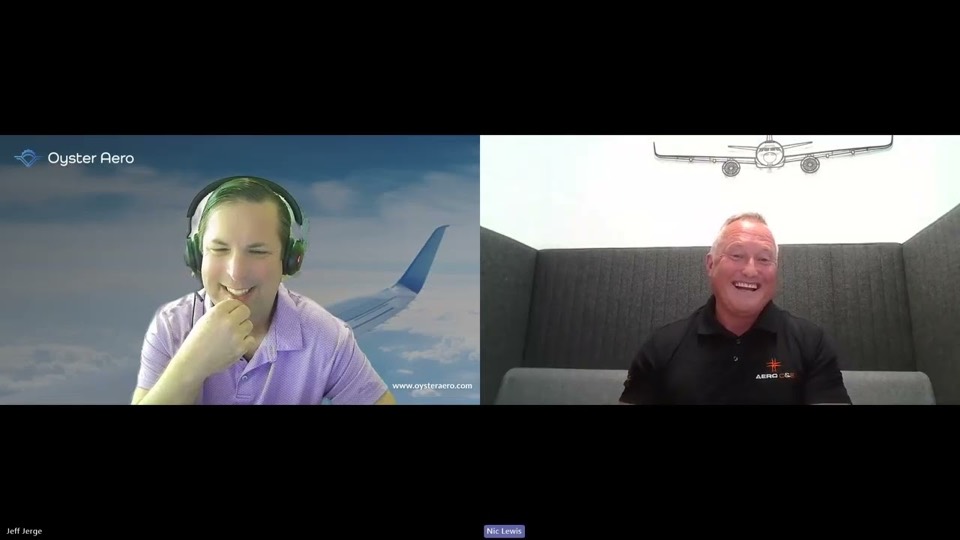
Nic Lewis, Aero C&E
About this episode
We are honored to have Nic Lewis join us on the latest episode. Nic shares his journey of starting PDQ Airspares at the age of 19! Such a cool interview with insights on business, relationships, family, and generational impacts. Don't miss it!
Transcript
Read the full transcript
From the episode's captions, as published. Words that can't be made out are marked [unclear].
Welcome to the Oyster Aero PearlCast, where we sit down with founders and leaders shaping the aviation industry. From freshly formed startups to the biggest names in the sky, this episode is brought to you by our friends at Turbo Resources in Phoenix, Arizona. Now operating in 450,000 square ft of state-of-the-art warehouse space, Turbo continues to keep the aviation industry flying and is actively buying material. Now, we hope you enjoy this episode. All right. Hello everyone. Jeff Jerge with the Oyster Aero PearlCast and we love the founders. I'm honored to be here with Nic Lewis of the newly ish formed Aero C&E. How you doing, Nic? Yeah. Good afternoon, Jeff. I'm very well. How are you? I'm doing wonderful. And over here in Memphis, you are over in the UK. Yeah.
Yeah. Just south of London. So, yeah. London calling. Awesome. Awesome. Awesome. All right. So, let's get into it. From a founder standpoint, how long you been in the aviation? What attracted you to the industry? Oh. Uh, so I was quite an early starter. I I um I I left school. I didn't I didn't enjoy school. You know, my my parents my my parents were academic. They pushed me the academic route. You know, I was more of a practical person. So, I went and get my hands dirty at at a at a spare parts uh company which was was quite local to us. And that sort of got my enthusiasm for sort of aviation and parts and and uh myself and a colleague started our first aviation business when I was 19. So that's back in back in 1990. Um wow. I I waited I I waited till I was like 47. So congrats on getting started early.
Hey I do you know what? I didn't have uh the luxury of wealthy parents or anything. You know, we came from a very sort of, you know, my mom and dad were [unclear] and uh, you know, they helped me scrape together a few thousand pounds to start the business back in 1990 um, with a business colleague and his parents helped him out a little bit and so, you know, I think we uh, yeah, we started off on a a pretty small shoe. Wow, I love this. Okay, so what was the business? So the business was like PDQS uh which we established in 1990. Um and then over the years we ended up exiting that business in 2018 2019. Um uh so we I was in that business for you know over 30 years. Wow. Um okay. So you're 19 and of course everybody loves aviation that looks up at the sky and is doesn't do well in school. I mean that fits really well.
But how did you land on CE? Like I'm going to start PDQ. Was there some sort of connection with a neighbor or or something? So I ended up going into business with with one of my brother's friends. Okay. Okay. And he he was already in an aviation business. Got it. Got it. Uh and we'd worked together and he was actually my previous boss. And we we used to we used to deliver AOGs late at night and we we we we came up with this idea of like you know maybe we could like do our own business and we were you know I was 18 he was like 22 and you know we thought we were just joking about and then then we had a customer that that we were very very close with and they said look guys if you want to if you want to go out on your own then then then you can count on our business right so that's pretty much how it all started. Um and you know within 6 months of starting that business then uh wasn't my wife at the time but uh my my fiance came and worked in the business. So we were a partnership of three of uh myself uh my wife. we got married the year later uh and and you know our other business partner and we we we're still very good friends to this day and uh no we made a we made a very good partnership but going to the sort of CE side PDQ was originally set up on components um we were we were a trading business in sort of 70727 um you know these the days you know pretty much you could self-certify parts back in the day right so um and then you know we've been through the whole spectrum of certification changes, um, material certification, non-instant statements, that sort of stuff. But pretty much the changing point for us was 911. So, we had just, uh, torn down two Virgin Atlantic 747s, uh, uh, 74700 series and a 747200 series, and pretty much 911 hit. Um, and
part of that whole deal was that we were going to support Virgin Atlantic with their remaining fleet. um with with and and sell some of the other material and that that just just just crumbled overnight, you know, like with uh the whole aviation sector, you know, was was changed and we got into CE as a bit of a survival mode because low value, low money, you know, we'd sold all our stock, cash was tight. Um and we with the help of a a very good friend of of ours in Detroit um they helped us out with a lamp distribution. So we were we got involved in G lighting, Chicago Miniature, Aino, that sort of stuff. And what that did gave us the opportunity to to go to any airline in MRO and offer them a product. You know, it was a door opener. And from that day, you know, we, you know, by speaking to customers, speaking to the, you know, seeing what requirements they wanted, we grew our CE product. Um, I would like to think that in in that time span, we grew PDQ uh and developed the whole consignment, you know, CE support, buying CE surplus, trading CE surplus, buying CE distribution.
we were pretty pioneers in the in in in that sector. Um, and I don't think there's many people there out there today that are doing the same thing. I um I mean I I started at a all and I remember CE was like past the potato. Nobody wanted it just because it can be so complicated and you know all this surplus inventory when you're buying in bulk and all that. Um so when you I love this. So your your successful business was something that you fell into because of a you had to and then was it very clear that said okay we're just going to focus on this or was it like well let's just do this for a while and then we'll go back to trading and you know roables or was it pretty resolute at the time once you started getting into the distribution side and all that? I think it became quite quickly apparent that we we would stumbled on the right route, you know, because you know, as like you said, you know, CE was quite a dirty word. If you're trading in components, nobody wants to deal on C& if you're dealing CE, you don't want to trade in components. And and I'm we're at that, you know, even in our new business now, we're we're at that stage.
Components is a turnoff for me. Um, you know, you think of the the investment, you know, I'd like to think you know, you sell a you you sell CDN and it never comes back, you know, um components, you've got on warranties, you've got shipping issues, there everything that comes with that. And you know, although CN is high volume, um you know, rejection and warranties is is is is negligible. Um low cost in in general that it's low cost shipping. Um and it's easy to handle. Agreed. It's high volume, but it's it's for me for for me it's just it's just more comfortable to deal in C& these days. You know, it's Sure. And that sort of brings me on to that sort of next thing is that we we do actually sort of partner with quite a lot of the component businesses. you know some of the well-established component businesses these days um where airlines or MRO are looking at you know uh you know offloading assets and stuff you'll find assets are a mix of of components and C& we'll strip out the CE they'll have the components so you know we we work with people like that so yeah you know our PDQ journey was was was very good um you know and and I just it was a good time to exit that our my one business partner wanted to he was a little bit older and he had some other stuff we wanted to do and um and yeah so you know with the decision was made that we would exit out the business um which I didn't really want to do because like PDQ was my life um you know and I think between him and CLA my wife and uh myself We we did come to the right decision. It was the absolute right thing to do, you know. It was, you know, and it was just before co as well. So, the the timing was perfect. And it wasn't um
I'd like to think it was a it was an immaculate sort of business decision, but it wasn't. It was just it was luck. And um and by doing that gave us a lot more choices in life. We we stayed we stayed in the business for for four four just over four years with the new owners. Um and that was okay. You know I think I think the people that we transacted with which is now sort of the FDH group um they were they were very kind to us and we had no issues. You know we'd heard of these horror stories of of uh people selling to private equity and um but no we didn't we didn't have any of those issues but we just felt the time was right to exit ourselves. The business was growing. it was, you know, becoming a bit more corporate and, you know, we're more of a uh entrepreneurial business. You know, we're we're we're, you know, it's just a high different sort of mindset. So, you know, we took a year out and then thought about what we may or may not want to do. And it didn't take long into that year out. We thought we've got too much to give, too much knowledge, you know, life's too short.
So, we set up Aero C&E. Sure. All right. I love working with um Paul and Will over there at uh at PDQ. So um he always says you're pretty darn quick. So that's what people most people whenever we in all the years that we traveled as PDQ people would say so what does PDQ stand for? And it's it do you know what it is pretty damn quick. And uh you know and you think about where you are in directories and you think if you go to shows how easy it is to remember. Um, you know, you want something short and catchy, you know, something that will be different and and that that's exactly what it stood for. So, um, was the name picked after a few pints or was it uh just pure artistic creativity on your end? Do you know what? If I was absolutely honest, when when Chris and I, we used to when we used to in our in our previous job when we were doing, you know, we do the sales during the day and we do the deliveries in the evening, we used to use a freight forwarder called PDQ Freight. Okay.
And we always thought we always thought what a brilliant name and that's how we came up with the PDQ Airspares. That's amazing. That's amazing. So, um, well, I love this all the way around. So you started that and you were quite focused on CNE and um I guess a lot of people that want to start their own companies or branch out some of them watch them they talk to me about these. So you know the saying is the harder you work the luckier you get. So you mentioned maybe it was luck that we sold at the time and all that and and I guess just uh like how would you frame business success in percentages? Is it, you know, just hard work gets you in those right situations and so it really is that or how is there a little bit of timing and luck that kind of go into it as well? I think a you have to you have to have a hardworking ethic. Absolutely. You know, and you have to in that journey you've got to go through the pain. You know, we talked about 911 earlier. um you know it's it's um you know that that that's that's a lesson in life and it's probably I think everybody everybody in business will go through a very difficult time you know probably like most marriages right you know marriage is not easy but you got to work at it and that's the same as as business but I I think everybody gets a break I think everybody gets an opportunity it's what you do with that and how you exploit it um and I think that's you know some people take it Some people don't. But then, you know, if um I Yeah, tough one. I you know, some people are just happy, you know, to to to to work through life and take their paycheck and there's nothing wrong with that. Okay. But, you know, there's also a lot of people out there that that are aggressively hungry. You know, they want to succeed whether it's of personal achievements or or business goals. Um, so yeah, I think most people get delivered up an opportunity at some
point in their life. It's just what they do with it. That's great. Um, so I guess the other question that I have is, um, all right. So, so, so you decided to exit the business and you know, when you have a founder that exits, I mean, you don't have to be jumping in and starting Aero C&E, right? I mean, I would imagine. I don't I don't know personally, but I I what I find fascinating is one, I'm sure you must miss it, but two, you're not done yet. You know, you're ready to still jump back in the industry and and keep things going and and kind of do it all over again, I guess, in some respect. So, um what's the thought process there? I think one of uh I think one of our drivers is I think it's always nice to succeed in a a particular sector and sort of be the best of what you do. Um and we had a couple of previous businesses. We had an aviation chemical business which was called Chemfast Aerospace uh which we established. These were all during the terms of PDQ.
Sure. and that ended up being sold went through a few hands and I think that's now the sort of the the the cornerstones of which is sort of H which is now sort of Wesco um so that's where that business started um and and you know we took that business to a certain level we were very good at it again you know we brought on the whole sort of consignment program working with customers um and then we also established roable repairs which is the wheel and brake MRO in the UK and that's still here now and that's now part we we actually transacted that to Watts Aviation and I think that's now a BSE company. So, you know, that's a I again, I think we, you know, we took that to a point of where we'd done the best we can. And then sometimes you've just got to go, hey, let's focus on the things that we're best at. And and that's how these business, you know, that whole business cycle is cyclical. You know, people start a business, they either stay in it for the rest of their life and hand it down to their family or they look at sort of exits. And coming back to your original question about Aero C&E, you know, we had too much to give.
You know, we were getting a little bit bored and everyone needs an interest. Plus, we wanted to invest in the next younger generation. We wanted to set this business up and we have a our senior leadership team here is very young. Um, and that was that's part of what we wanted to do to actually sort of nurture that sort of skill set. you know, show them what what we achieved and what they can achieve. So, you know, although CNA is probably about 12 months old and and we we are we're doing pretty good, um I don't expect to be at the helm, you know, in the next 12 or 18 months. I think both my wife and I will will step back and we'll hand it over to the youngsters and let them drive it forward with hopefully as they keep referring to me as legacy which I'm not sure how I feel about that. Uh but I say with legacy is all the knowledge right so um we'll keep them on their toes but the idea is to have an interest moving forward watching the younger you know the younger generation uh thrive that's that's that's our goal. Isn't that weird, scary, and cool at the same time?
Like, I started Oyster University so that I could teach new hires the aftermarket, right? Because we know how training is, people just go sit with somebody and whatever. So, I started up, we do classes and all that, but I I don't know if it's an age or what, but it's like I I have that, too. Like, I want to bring in the next generation, teach them, and watch them flourish. So it's that's really that's that's so interesting. That's so but if we if we if we don't do that who's going to do it, you know. Yeah. Yeah. You know, and you look over time, everybody's got a peer or somebody they looked up to in the generation prior or whatever, you know, there's people that that aspired me. Um and then you just got to pass that down. Yeah, for sure. Um, so in the CE space, uh, specifically, like is do you see that it's going to be a big technology play or do relationships still really matter? Because I find what's shocking is everybody thinks like, oh, just go buy a light bulb. It's not that. It's like what I find is that you all get really creative with your airline customers in these procurement solutions and it's not just this e-commerce click that everybody thinks that it is. So um how do you look at that from a bird's eye view of the implementation of not specific technology but just overall like aviation's clearly relationship oriented. Um where does technology kind of weave in that and especially with I'll say newer generations as well. Do you have any thoughts on that?
Yeah, I think I think going back you know years ago there was no web portals. I mean we used to you know used to just work off a printer right? you know, you don't have any screens or anything. Um, and I always, you know, we I think there is a place for web portals and I think there is a place for AI. Um, but ultimately relationships is always going to be the cornerstone of business always. You know, you think you think of how business has evolved whether it is corporate entertaining, which is pretty much snuffed out these days because of compliance. The only things that haven't changed is relationships. you know the shows, the meets and greets, you know, the drinks at the receptions and things like that. That part of the industry hasn't changed and I think that will that will continue to thrive. Um, there is a degree of automation. There is a degree of using AI tools to help you manage your internal data, but ultimately it's about me picking up the phone, say, "Hey, Jeff, how you doing?" You know, can you help me out on this? You know, and and and that won't change.
Yeah. the the optimistic feud that I heard recently and I kind of love it and you can hang on to this is we were very we were on the phone all the time we were talking and now we have so much task to do that it's hard to work the relationship into your day so the hope is that AI will come in and help with those tasks so that we could be free to you know have these relationships kind of re-engage I guess and I find with myself like even with Oyster when we do inventory upload we use AI and all that kind of stuff. So, it's like my day now is significantly better that I can actually do stuff like this and kind of move things forward and that I I think is a really good use case for its application. So, yeah, I mean we recently had spoke to a an AI consultancy company and we're very fortunate because with the business being quite new, we have quite clean very clean database. So, we don't we don't have a lot of old sort of data. so we can implement the AI tools that we want to implement now that's going to help us moving forward and I've pretty much hey that's a little bit above my pay grade right so I pretty much left that to the youngsters right what do you want to see in the business what tools do you want to see drive this business forward what tools does this AI tools does this business is going to help the customers so yeah they're they're going to drive that forward and I'm you know I'm just going to probably listen and get bamboozled that is so cool I Love it.
All right. So, um, over under, we're going to put your wife on as well. Is Aero C&E your sunset business? And after that, or, uh, is it possible that we'll see you for another 20 years just dabbling and starting things? And what do you think there? I think if you don't want to answer because she's not here, I get that, too. So, I don't know. She's in the background, right? like did she look over? I think we're going to be around for a while. You know, I this it's a great business. It's a fun business. You know, it's it's not a salary. It's a passion. Uh and I love business. I love the relationships we make in business. You know, a lot of my best friends are people that I've met through aviation and and I want to make more, you know, I want to make more of those and I want to see it's infectious to see the next generation succeed. So, um No, I whether whether we're doing business from a sunbed in the Bahamas or something, you know, it's uh you know, we'll be doing it for some time. Plus, you I like to think we're not old enough yet.
Perfect. All right. Well, Nic, um thank you so much for coming and I could tell you out of all of them that I've done, I've enjoyed them, but this has been one of the top ones because I think, uh your story is just so interesting. So, I have one more question. Um, you're 19 and starting this aircraft parts business while all your friends at the time probably were more interested in whatever, right? Was that hard to lock in at that age? Because you know it some people don't find themselves till their mid20s and you know they don't they that discovery was that I would imagine your friends were like no what are you doing? It was a big It was a big leap. But I when I was at school, I had three jobs. Okay. And so I, you know, I I'm not afraid of of work. I'm not afraid of hours. I'm not sure afraid of putting a shift in. Um it made me grow up quickly. You know, both my wife and I, as you rightly said, you know, we had friends that were out partying and, you know, we we were married young, we had children young.
And it's actually our son that is spearheading you know Aero C&E at the moment. Um you know and he's 20. He's just 30. Uh so he was working at PDQ for I think 12 or 13 years. Um but uh did we miss out? No. Because we did everything early and we can now we can now enjoy the things like you know you know I'm I'm 56. Okay. And you know I'm I'm very fortunate. I've done a lot and there's still a lot more to come. Um, but we're not we're not too old to do stuff, you know. Um, so yes, we did miss out on a lot of stuff, but I think upon reflection, we're getting a lot more later on. Absolutely. So, the lesson is don't wait. Get started if you have this in you or at least give it a shot. Right. Never be afraid. All right. So, um, I'm looking forward to a podcast in about a year with your son. We're going to book that now. We'll put it on the books and we'll, uh, we'll let him share his perspectives down the road a bit. So, well, our our daughter's a doctor and she's itching to get into the business, right? So, you know, there can't be that many that went through medical school and came over.
She would be one of the few, but I'll bet she'll do well at it. So, all right, Nic. Good talking to you and um we'll catch up soon. Absolute pleasure, Jeff. You take care. All right. Bye. Thank you. Bye.