PearlCast › Episode 23
Episode 23Sep 16, 202515 min
Maddi Gay, CorePilot
About this episode
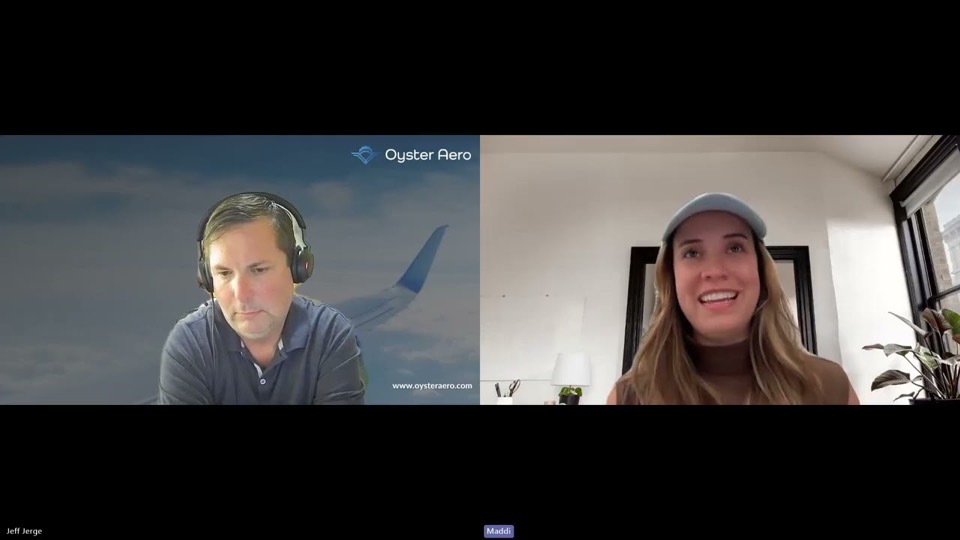
This week we’re joined by Maddison Gay of CorePilot! Maddi shares her background in software investing and the inspiration behind launching CorePilot as a new ERP for aviation. She also dives into the role of AI in aviation applications and how customers can better evaluate key variables when transitioning between systems. Don’t miss this insightful clip with Maddie!
Transcript
Read the full transcript
From the episode's captions, as published. Words that can't be made out are marked [unclear].
Welcome to the Oyster Aero PearlCast, where we sit down with founders and leaders shaping the aviation industry. From freshly formed startups to the biggest names in the sky, this episode is brought to you by our friends at Turbo Resources in Phoenix, Arizona. Now operating in 450,000 square ft of state-of-the-art warehouse space, Turbo continues to keep the aviation industry flying and is actively buying material. Now, we hope you enjoy this episode. Hello everyone, Jeff Jerge here on the Oyster Aero PearlCast and I am delighted to have Maddison Gay with CorePilot and she will now be known as Maddi. Maddi, how are you doing? I'm great. How about you? Doing good. How's summer treating you so far? Summer is good down in Miami. It's very hot, though not as hot as usual. So, that's the good part about summer in Miami. You never know what you're going to get, but um so far so good.
Good deal. You're up in North Carolina. Memphis. Memphis. Memphis. Tennessee. There you go. War. It's supposedly warmer the more north you get. Yeah. Yeah. Memphis is like Florida without the beach. It's very humid and then there's no there's no sea wall or no no place to go. Anyway, there you go. Um, so talk to us about you. You're in a startup called CorePilot, which is an ERP, right? Yes, indeed. Yeah. How how did you jump into this? So, uh, me and my team, we all come from a software background. And so, me personally, I was a software investor for a bit. I worked as chief of staff at a software company out in San Francisco for quite a few years. And all that time was really building a lot of base knowledge working with, you know, as an investor, working with other founders, as the chief of staff, working with the founder of my company of how to start a company, how to run a successful company, what does a good company look like. And the big takeaway I got from that experience was a system that can go into an industry and completely, you know, advance the industry or make all of these changes is not only a really good business from a business standpoint, but it has the potential to make a lot of change um happen and makes you really tight with your customers and gets you really into the industry. Um, and so that was kind of always the thought process going into wanting to start my own industry or my own company.
Um, I knew it was going to be in the aviation industry because I grew up in the aviation industry. My dad was a F-16 fighter pilot in the Air Force for 20 years. His grandfather was an F-16 pilot. My great-grandfather was a pilot in the Air Force. And now my brother's an F-16 pilot. So Oh, wow. It's in my blood. That's cool. Yeah. Yeah. So definitely wanted to figure out a way to kind of take all that software knowledge and get back into the industry and found some investors. Um got them on board with that vision and they helped me research and understand the aviation space. And what it really came down to was where in the aviation space can we have the greatest outsized impact, right? Where can we, you know, make a change and then that has graduated effects across the entire industry. And it quickly became clear that the aviation aftermarket is that place. you know, if we can speed up part transfer and moving um parts and getting parts to the end market, um we're able to get planes back up in the air faster, we're able to just really move move the space along. And so that was the thesis going into it um in 20 early 2023 and we've been doing it for about two years and are are loving it.
Wow. So um congratulations on that by the way. Thank you. So how's it going? like how's how's how's the launch of CorePilot and how did you come up with the name? Do you have a is there a story around that or is it just a cool name? It's it's really I knew I always wanted pilot in the name because those were my roots. Um and so wanted to have that word pilot there and the more I talked to people in the industry the more I learned about it. Um core is obviously a big aspect of the aftermarket uh you know sending and receiving core and so I liked the concept of CorePilot and I will say that we released our name I think six months before Microsoft co-pilot came out so it was our idea first. There you go. They stole from you obviously. So all right well good. So um how's the launch going? The launch is going well. We um we have a really great base of initial customers that we've worked with over these two years. um we've worked with those customers along with 30 to 40 industry adviserss across the entire space to help really um get it industry specific.
And so that's the nice part about CorePilot is we're not built on top of another platform. And so we're able to completely control our code base and get incredibly um niche specific to aftermarket part suppliers in their workflows. Uh so that's what we spent about the first year and a half doing. And then um the last six months have really been focused on launching, bringing people on board, getting them up and running. Um and you know, you're you're obviously on the cloud as well. There's development never stops when you're in the cloud. So that's that's been you know, our bread and butter these days is launching people and continuing to develop to their needs. Sure. Now, um many years ago there was only like one ERP, maybe two, in the aviation aftermarket, and there are several out there now. Yes. Um, so I'm sure you get this all the time, but what how's how do you answer the how is CorePilot different than what else is out there? What what makes you what makes you guys unique? So a couple of things. So what you saw in the technology evolution at least within the aviation aftermarket is you saw ERP come about, right? You know in the 80s there was one ERP platform. It was huge. it came into the industry and it gave people a software platform and then you saw this conversion probably 10 years ago from just software you know server-based ERPs into cloud-based ERPs and now you're seeing this conversion into AI powered ERPs and that is what I will say I think we are on the front line of we do have that software background we have that software experience our all of our engineers have either driven um and created the AI platforms at other companies or they're incredibly familiar with and have spent their entire careers, you know, learning and studying with AI. So, I think being an AI first platform is what makes us stand out and and be pretty different.
We didn't just build AI into the platform as it already existed. We've built with it from the beginning. Um, and then I think the other aspect is that customer service and the ability to continuously build with you. Like I said, we own our own code and so anytime tweaks and changes need to be had, you're dealing directly with us. You're dealing directly with our engineers. And so we're able to provide more of a configurable experience for our customers that larger platforms may not have access to. Got it. Got it. Well, that's pretty good. And um how do you find like the launch with these customers? Because aviation parts are so complex, right? It's not just list some inventory and send a bill and you're done, right? So yeah, and that's what we really spent, you know, the the two years or year and a half leading up to launch doing is really sussing out all of those intricacies that are in the workflows to where we're really confident that we have a great, you know, global system. I always call it the full circle of you can buy, you can sell, you can store, you can ship, you can receive. Um you can do repair management as well. And so once we built that circle, now it's working with individual customers through their launch to get any little small tweaks and and you know field differentials in their system so that their team has all of the information they need to just use the system um you know out of the box with AI. You know um I I'm sure you remember everybody kind of used the term blockchain and marketing, right? and everybody use that and then we met a company a couple weeks ago that's really been actually doing it and I get the sense that you're not just throwing around AI as you just mentioned.
Um so where do you find AI in the ERP cycle is being used the most right now? Yeah. So right now, so realistically, you have to build up trust in an industry for AI, right? It's a new thing. Nobody's really had access to it. And so what we're really using right now is AI to eliminate manual data entry. So typing in history, you know, reading RFQS that come into the platform, reading vendor quotes that come into the platform. instead of having to, you know, manually log all of that information, we're using AI to process that, which enables you to get to the next step after the processing of that information that much quicker, pretty much instantaneously, right? And so you can do things like, you know, auto quote or auto purchase order or, you know, auto broker if if you're in the brokering business through um through the use of having AI in the platform. uh where we want to go with it. I mean there's this industry has so much data within their ERP and so the real use of AI is to take large data uh amalgamations and create strategy out of it, right? And so if you have all of this data that you're sitting on, but you don't necessarily know how to analyze it. You can use machine learning and create rules, right? Like every time this is true, I want this to be true.
We've had that in platforms for a long time. But what AI is able to do is AI can take seven different sources of data and start making estimations and say, well, you know, generally you're selling 20 of these parts um in the fall of every year. So, let's start to prepare you ahead of time so you're ready for that cycle. And so, I think there's a lot of cool things that, you know, we don't have built into the platform today because we're building up that that trust cycle with AI that that we can go to in the future. Very cool. So, um, in the industry now for two or three years, what are what's what's maybe surprised you the most about it? I think, um, what has surprised me because, you know, as an investor, I've seen hundreds of different industries. This industry is so incredibly friendly, willing to help, excited to get on the technology revolution. Everyone is is thrilled with any sort of new technology, even competitors, right? competitors are excited to see new new people in the industry because it means new ideas, new adoption, new drive towards, you know, making the move to nextgen technology. Um, and so I I've been really pleasantly surprised by the people in this industry specifically.
You know, outbound uh calling and emails and and walking up to people at conferences can be an uncomfortable, especially when you're not in the industry, um can be a pretty uncomfortable situation. But everyone's just incredibly friendly, willing to have a chat, willing to, you know, lend a helping hand. And that's really how we've developed the the platform is those people saying, "Oo, you know, I wish that my ERP could do this, or I like what you did here, but maybe tweak this a little bit." Um, and so that's how we've been developing the past two years and has been the biggest surprise. And then do you find people are hesitant to switch? Yeah, I So what we find there's there's a little bit there's two things that we usually run into. the the value of the switch outweighing the value of the time and effort that goes into switching. And this is true across all ERPs across every industry, right? It's it's how you run your system. It's how you run or your business, your entire business gets switched over to this ERP. And so there's a decent amount of time investment, change management, people needing to learn a new system. Um that you have to see that end value there.
And so that's what I think we have really invested in is that user experience showing the value upfront in that you can just see it in the demo even, right? Um but one other thing that we run into a lot is what we call sunk cost fallacy. So it's the idea that you know I I bought this ERP back in the 80s or the [unclear]. I have sunk thousands of thousands of thousands of dollars into it. There is no way I'm going to change. And what we always like to say to that is okay, but what's the cost of not changing? Are you going to sink thousands of thousands of thousands of more dollars into it to eventually get what you need and you have to do this again and again and again over the next 20 30 years or if you make the switch now and you're on a platform that can grow and scale with you and grow and scale with that nextgen technology do you end up saving more money in the long run and so that's I would say the the biggest those two are the biggest barriers to switching is time um and then you know I've I've put a lot of money into what I have today okay so um last question what is like how are you handling integrations and like what's your recommendation for finding software etc.
Yeah. So there's there's these two different concepts in software in general when you're looking at from an investor standpoint or when you're a software company trying to you know own your your specific market. There's best and breed and there's all-in-one. And those are kind of you know best and breed is the platform that does one specific thing and is really really good at that one specific thing they do. And then there's all-in-one platforms which canvas everything across the board, do everything you need. You never have to leave that platform. And you can you can fall somewhere in between, but it counterintuitive to what ERP feels like. I tend to always suggest go for the best and breed. Um, the more you put into a platform, the more the platform does, the less good it is at every individual thing, right? It's it's like the the quality kind of decreases as the span rises. Um, and so for things like marketplaces like Oyster Aero, for things like accounting, for things like um, you know, paperwork or quality or or blockchain, even you mentioned blockchain earlier, go find the software solutions that are the best at that and invest in those and then get your ERP to integrate with those. And I think that is a big we have a lot of people that come to us that were like, "Oh, but we want you to do this and this and this and this and this and we want this all in your platform." And we're like, well, we could do that or we could be really, really good at helping you buy, sell, and store aircraft parts, and then you can talk to these three partners that we have that we think are the best in breed, and you can get onto their platform, and then we'll integrate, and we make it a seamless experience. Um, but you you get someone who's really really good and focused at the thing that they that they do. I understand that completely. Yeah. Yeah.
All right. So, how do we get a hold of you? Uh, you can you can reach out on LinkedIn. You can shoot us an email. Our website has direct links to all of our calendars. So, um, if you want to check CorePilot out, feel free. Head to our website, corepilotcloud.com, and we will we are always waiting. All right, Maddi, it was good having you on today. Yes. Great talking to you, Jeff. Thanks. Thanks.