PearlCast › Episode 24
Episode 24Oct 6, 202517 min
Ben Rhodes-Kraupf, Sales Patriot
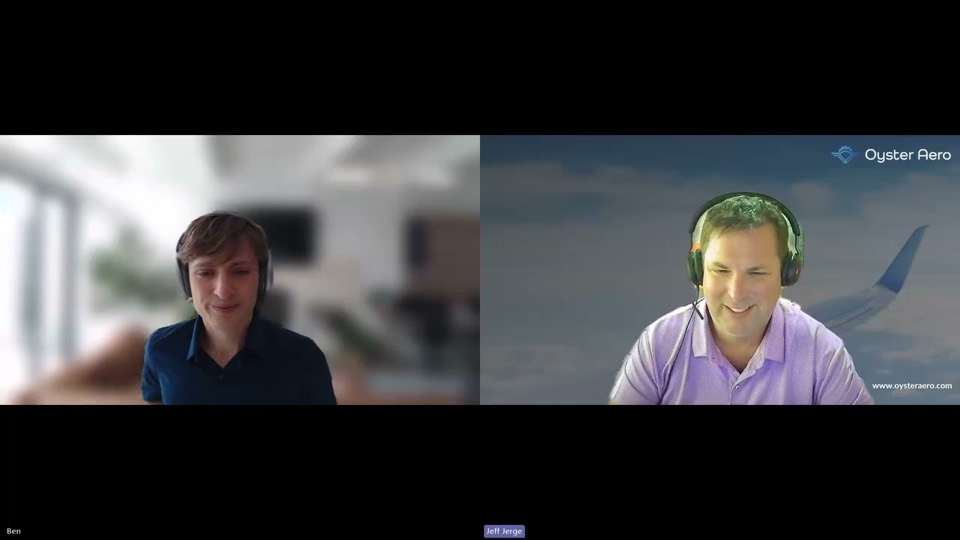
About this episode
Curious about how AI is transforming aviation? Don’t miss this episode featuring Ben Rhodes-Kraupf of Sales Patriot. With a team of MIT, Berkeley, and Y-Combinator alumni, Ben shares how Sales Patriot is helping companies digitize supply chain processes.
Launching first in Defense, companies are using their platform to bid more often and bid faster, achieving 7X greater efficiency. AI is rapidly reshaping the industry, and Sales Patriot is tackling some of the biggest pain points around data entry and fragmented information.
Transcript
Read the full transcript
From the episode's captions, as published. Words that can't be made out are marked [unclear].
Welcome to the Oyster Aero PearlCast, where we sit down with founders and leaders shaping the aviation industry. From freshly formed startups to the biggest names in the sky, this episode is brought to you by our friends at Turbo Resources in Phoenix, Arizona. Now operating in 450,000 square ft of state-of-the-art warehouse space, Turbo continues to keep the aviation industry flying and is actively buying material. Now, we hope you enjoy this episode. Everyone, Jeff Jerge with the Oyster Aero PearlCast, and I'm really happy today to be joined by Ben Rhodes of Sales Patriot. How you doing, Ben? I'm awesome. I'm awesome. I uh I just flew in last night on a red eye from New York, but um I'm happy to be here and uh thank you for having me. Sure. Yeah, we love founders. So um and what just your story on how you started has been pretty cool. Now I met you or your team at Quad in Nashville. You all were at the defense show and what struck me is typically when you talk about founders of companies and aviation generally it's people like me, right?
been in the business for 25 years and, you know, wanting to take a crack at um trying to solve for problems that have frustrated us over the years. But you, um, you're not a 30-year industry veteran, are you? No. No, I'm not even 30 years old, so it'd be it'd be hard to make that happen. So, um, before we get into like Sales Patriot, how did you find yourself falling into aviation? Yeah. Yeah. It's a it's a really great question. Um, I think it's really just been funny running around all these conferences because it's like, wait, who are those kids, right? you know, who let someone's kids in here? Like, what are they doing? Why are they like, you know, dropping out of MIT to go make this crazy stuff? Um, so I think it's actually been really funny because, you know, having that little aspect of like, oh, this is weird. I've never seen these faces before, right? Why are they so young? What are they doing? Um, for sure. And yeah, I think in some sense it's like, how did we fall into this? Really good question. Um, so at the time I was just graduating high school. Uh, I was researching AI at MIT specifically around quantizing large language models. how do you make them small enough to run on edge devices instead of in the cloud?
Um, and I had just gotten into MIT uh and a few other schools including Berkeley ME, which was like a dual degree business and engineering program. Uh, so I ended up flying out there and meeting a lot of these really interesting people that were just really focused on the intersection between business and engineering. That's like really my crowd. Uh, and that's where I bumped into uh my co-founder Nelson um who at the time was actually chief of staff at a defense firm. So good family friend of his had just sort of taken over this dying defense firm. Um and you know onboarded him same day gave him the orchart and said just go you know go meet people go talk to people figure out what's going on here. Um and you know at the time they were making lights and wire harnesses and they were just having a really hard time with their sort of volume like just their sales volume was the major problem because right at the time they were going on to dibs printing these contracts putting them together with the tech docs and then shuffling these paper folders you know around the factory floor to go make this happen right to prepare the bid to compile the quote. Uh, and you know, Nelson saw this and was like, "Guys, what are you doing? You got papers falling off your desk. Like, let's just digitize this process. Let's make it easier, right?" Like, you know, any transformation going from paper to digital is going to have some effect. But I don't think Nelson really expected to see just the amount of volume that that increased. You know, long story short, they end up, you know, turning the firm around essentially uh finally go cash flow positive uh for the first time in four years. Um, and that's when Nelson was like, "Okay, you know, there's something here, right? Like what? I don't know what this industry is. I just built this simple tool, but like how can we go capitalize on this?
And that's sort of when I bumped into Nelson at Berkeley and he was building these solutions. And I was just so blown away because I'm like, I'm sorry, what what are you you're chief of staff at a like defense manufacturing fair making lights and wire harnesses? Like just out of this world, right? Um and so that's that's where I was really like, hey, like, hey, how can I join you on this journey, right? What can we go and build here? Uh how can we combine, you know, the industry experience I'm bringing the AI world with sort of this really interesting intersection with just like component level manufacturing? Um yeah, so that's really that's really how we got going. Um ended up raising some money out in Silicon Valley as a preede round um to go and solve this problem and then really the problem sort of evolved from there as we just learned more about the industry, right? I mean we knew not very much and so was running around meeting people like you at these conferences and just just talking with them to figure out how we can solve people's problems. That's cool. That's really cool. So yeah, I mean you blew off MIT and Berkeley and we're like no, I got to go solve this problem now. So, got to go make it happen. That's pretty awesome. So, yeah, today I mean for years there's plenty of bidding services out there. So, you know, oh, I get an email that says that this NSN just came out for bid or whatever.
Um, are you just that you just send an email and say, hey, you got a bid and good luck. Yeah. Yeah. So, that's I mean really that's how we started, right? And we were sort of naive entered the industry, started going to all these conferences and talking to people. Um, and you know how we had started was we are going to help you not just find, but we're also going to help you review and bid, right? One of the things we've realized with a lot of these bidding services is they they give you the opportunity, but then everything after that is sort of your own workflow, your own stuff. So, you see the opportunity and then you're going into your ERP system or you're going into your email to email vendors. You're you're doing all this additional stuff on top of it. And just that fragmentation at that defense company was really causing a lot of those problems. Um so what we sort of said was hey instead of just finding what if we did the endto-end flow and what would that look like right um so we ended up running around all these conferences talking to a lot of manufacturers and what we really found was um not just manufacturers had this problem but you know distributors really had this problem because you know maybe a manufacturer spends 10% of their time looking for opportunities whereas a distributor you know 90% of their time is literally doing the supply chain optimization here to find the opportunity and mapping it to America's industrial base right so uh The thing we really focus on is processing all this data in a streamlined workflow. Right?
So whether you've got an opportunity coming from DIB, SAM, Nikico, uh any sort of portal that you use or any sort of email inbound, right? We are sort of standardizing that data using AI and then we're really helping you workflow it with your supplier base. So we'll automatically map all those opportunities to potential suppliers. We're integrated into your email so you can select suppliers, send quotes out, and then AI will actually interact with your suppliers to go and make that happen. Right? So right now it's just such a human process where they've they're sort of stuck in between all of these different systems whether they're going to their ERP, they're going to their email, they've got Excel spreadsheets open, they're doing all this craziness, right? And really our goal is, hey, let's let's, you know, make a solid foundational data platform and let's help people interact with AI on top of that to be able to streamline this process. So you know, our our catchphrase is really decisions, not data entry. And that's really what we're trying to bring to the industry. So, I think that's what really struck out to me and that's why I invited you on the podcast is, you know, I was expecting when I walked up to your booth to another bidding service. Cool. You know, um, but I feel like there's a lot of opportunity in streamlining, not just because you're taking, you know, that data entry cost out of your business, but so many companies don't bid on stuff because they don't want to deal, right?
So if the if the deal isn't worth more than a million dollars and they're saying no to 250,000, they're saying no to 100,000, they're saying no to 500,000 because it's not worth their time to spend four to six weeks putting together not just their own capabilities, but capabilities of everybody else behind them. Yes. And so that to me is what is most striking about your system is it's not only that it's um you know it it it's because of efficiency you can tackle so much more work. Right. Right. Right. I I mean goodness I couldn't have said it better myself. I think that's sort of our our like you're letting the cat out of the bag. uh because it's just really what we see here is you know by making someone 7x more efficient you know it just changes the margins right like distribution is very much a margins gain game game and so if you're you know seven times more efficient right in terms of just like whether it's I mean with kitting my goodness think about how many different quotes you got to go out to get to put together a kit right like with all these different things if it's like close to autonomous the answer is the the math fundamentally changes about how you should be doing distribution right um And and that's really what we've seen with the various industry partners we're now working with where they're really having to go back to the drawing board and think about, hey, you know, we had these certain rules about our margin levels or what size of contracts we could go after. But the answer is, you know, when we can almost fully autonomously pursue an opportunity and work with our supplier base to to make that happen. Like, well, man, we're we're talking about something totally different.
And the other thing that was amazing to me is there's not a lot of people that have integrated with Dibs and are allowed to integrate with Dibs and you went and got that done, right? Yes. Yep. So, we've got industry partners that help us do that and then we're also going to be, you know, one of the first companies in 15 years to actually go and make that happen, right? Um, and so that was one of the things we saw as the last sort of step in making this entire platform streamlined, right? Like again, decisions not data entry. And so, you know, once the platform is on board and we've really got it running, like, you know, we see people using their mouse and not their keyboards, right? Because the answer is the AI has taken care of all the grunt work and they're just saying, "Yes, I agree." Right? The the supplier sends a quote back. We fully extracted the quote. We've drafted a follow-up email saying, "Hey, so sorry. You know, you missed the country of origin or you didn't quote the first article test, all this stuff." Boom. Just send that email back, right? Like, they didn't have to draft that. They didn't need to do anything. Uh, and all the way to the end, right? The answer is if we have the entire supplier quote, we have all the information about the opportunity and the quote, we should also go ahead and fill out, you know, the dibs board as well and so that when you hit submit here, you know, it goes straight away and submits on dips as well.
So, one of the other pain points in contracting as you know is I mean all the requirements, all the flowowns, all the compliance, the labor versus cost versus materials. So, um you're more than just getting prices from people, right? Oh, yeah. Yep. Yeah. I I I mean I think this was actually one of the things we ran into really on about early on about building this system is what we found is it really can't just be you know an out of the box solution right a lot of these other services you know you're you know you're you're spending x amount a year and it's just here's the software here's the login good luck have fun right what we've really had to do is go into these distribution facilities and go look at their exact workflows and the types of questions they ask right because the answer is you know an MRO facility is going to be looking for different things than someone else right so you know their Customers are asking for different things. Everyone needs something different. And so being able to really create this pipeline in a way that is modular and able to change, right? The answer is we're going to be asking different questions. A request for quote is going to look different. You know, sometimes you need some sort of attachment asking for some sort of traceability, right? And you've got to be able to extract that. Sometimes you don't, right? Uh so really this is what has made it so difficult and this is really where the AI shines, right? like this is where we have a lot of fun in terms of being a bunch of kids coming out of some of these, you know, really interesting research labs that are focused on solving these really interesting, you know, data problems and making sure that you can process everything and and really make sure it's, you know, done well.
Wow, that is so cool. And how many other are you on your team right now? Yep. So, we've we've currently got seven. Uh, and we're, you know, hoping to double here in the next two to three months. Um so it's you know we've we've really just recognized that this is such a pressing problem um that it's a question of you know not if but when uh and how can we go make that happen faster right uh you know it's just like we are consistently seeing now with our with our current customers that they're like hey can you go apply these same frameworks and processes to my post award process we started in defense you know going to these bid boards hey can we do this commercially right can we can we've got you know sure I've got 10 people on my defense side of the business but I've got you know 300 100 or I've got 50 people on my, you know, commercial side of the business doing a very similar thing except, you know, instead of looking at dibs or new grow and Sam, they're looking at various emails coming in, they're looking at various OEM portals, right? Can we do those same things? And like, you know, we've really built the software to be able to handle that. And so, we're really just like understaffed, right? It's like the biggest problem we have is, hey, let's go get really awesome, great AI talent and make it happen even faster, right? I mean, I used to run a Boeing MRO and once a year we'd go out to all of our repair vendors and get firm fixed price contracts and all that. So, this is exactly what you're talking about.
Um, and our compliance even, you know, is probably not as heavy as a government contract. No. Yes. I feel like we really bit our teeth uh in terms of the actual uh dealing with government first because government just has so much of these problems and then everything else is almost a little bit easier uh in comparison. Uh and so I think it was actually really awesome that we sort of started in this weird way starting at the you know component level manufacturer and then understanding up through that the entire supply chain. Sure. Sure. Yeah. And then obviously commercial derivative stuff would be good and then um you can maybe find your way into commercial too. So, how's it going? I mean, you when did you launch officially? Goodness. Uh, you know, it's funny. I don't think we've ever really had um an official launch. We've always just kept building. So, the answer is, you know, we started with this component level manufacturer and then someone else comes along, we just start building that, right? Like it's really just been uh so we went through, you know, a YC batch which is essentially an incubator and they really say they their their thing is just launch every day, right? Like basically every single day you should be launching something new, rolling out something new. just that kind of like pressure and that kind of like deliverability speed. And so like we haven't even really had time to put together launch posts or feature posts or any of that. And to be quite honest, we haven't needed to, right? Like it's such a pressing problem that like you know, we've now got people coming to us and saying, "Oh my gosh, I heard you solved this over here. Can you solve this for me?" Right. Um sure. And so I mean we've we've been quite lucky. I can't exactly say when we've launched, but in terms of just how long the company's been around, we've been around now for goodness eight months now. Um, and we're we're having a lot of fun so far. So, we'll we'll keep seeing how it goes.
Nice. And and there is a Silicon Valley playbook. You're backed by um some pretty powerful individuals as well, right? Yes. Yeah, we've been we've been pretty fortunate to have this kind of um you know, backing. Um, yeah, I did not see myself dropping out of, you know, college freshman year and and, you know, raising some crazy sum of money and from, you know, really awesome people. Uh, some people include, you know, like Rich Miner, co-founder of Android, um, Steve Blank, U, right, like Stanford Gloria Institute, just really, really interesting people that really were able to see this problem and say, "Okay, yeah, this this needs to be solved. You know, I believe in you guys that you guys can go make this happen." Um, and they've been awesome to lean on throughout the journey to just, you know, hey, we have no clue what we're doing, right? I think like, and we're pretty we're pretty honest about that. And, you know, being honest about that really enables us to learn quickly, right? Like, sure. Being very honest has enabled me to say, "Okay, hey, I'm sorry, I don't understand this. Can you just explain it to me?" Right? And like the the speed of iteration and how much we've learned in just this short amount of time has really just it's it's blown my mind.
Like, I didn't I knew nothing about this industry eight months ago, right? Um, and it's really, I mean, you know, through people like you to be quite honest, right, who just take the time, you know, and are like really interested in what we're already doing and then really interested say, "Oh my gosh, have you thought about this?" I'm like, "No, I haven't thought about that. What do you mean?" Right. Um, that's that's been just a ton of fun connecting with people in the industry. Very cool. And you went through Y Combinator, right? Like you made it. So, we went through Y Combinator winter 25 batch. Um I was actually just back there the other day uh giving a talk on how to do sales which I I didn't think was something I knew how to do going into that thing. So um it's been it was quite the experience um and just was generally a ton of fun. I think you know we didn't get to spend a lot of time in Silicon Valley during the YC batch unfortunately just because you know if you go into the defense industry the answer is it's you know an in-person industry right go to these conferences shake these hands talk to people you know understand their problems and you know confidently say hey we can we can make this happen we can solve this very cool well Ben absolutely love what you guys are doing and I can't wait to see um you know how quickly you grow and um that's the the one thing I will tell you is you know once Once you're in the industry, you're not leaving. So, you know, don't don't think you're going to jump to the restaurant industry after this or anything. Oh, no.
No, certainly not. Well, thank you so much, Jeff. Really appreciate you. Yeah, it was great having you. Take care. Awesome. Take care, guys. Thank you. Bye.